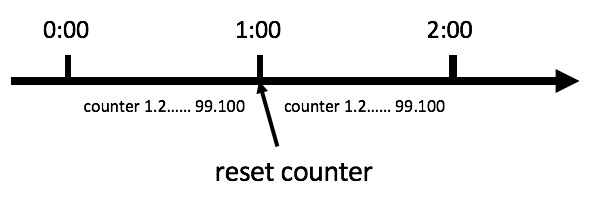
public class Counter {
    public long timeStamp = getNowTime();
    public int reqCount = 0;
    public final int limit = 100; // 时间窗口内最大请求数
    public final long interval = 1000; // 时间窗口ms
    public boolean grant() {
        long now = getNowTime();
        if (now < timeStamp + interval) {
            // 在时间窗口内
            reqCount++;
            // 判断当前时间窗口内是否超过最大请求控制数
            return reqCount <= limit;
        }
        else {
            timeStamp = now;
            // 超时后重置
            reqCount = 1;
            return true;
        }
    }
}
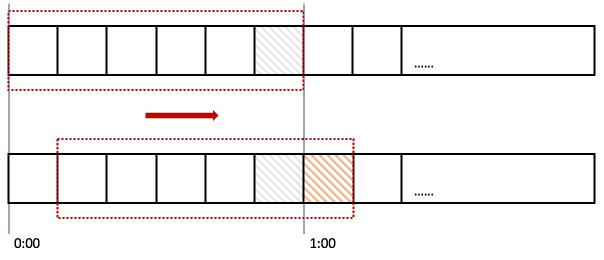
//一个并发安全map,skip list有序 this.measurements = new ConcurrentSkipListMap<Long, Long>();
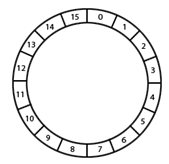
1 2 3 4 5 6 7 8 9 10 11 12 13 14 15 16
/** * 获取map的key,以时间纳秒值为key * @return */ private long getTick() { for (; ; ) { final long oldTick = lastTick.get(); //每纳秒处理的请求很多,减少compareAndSet的失败次数,这儿*COLLISION_BUFFER final long tick = clock.getTick() * COLLISION_BUFFER; // ensure the tick is strictly incrementing even if there are duplicate ticks final long newTick = tick > oldTick ? tick : oldTick + 1; if (lastTick.compareAndSet(oldTick, newTick)) { return newTick; } } }
private int window; //计算窗口 //整个循环数组窗口 private int ringWindow=window+30;
requestCounter = new AtomicInteger[ringWindow]; failedCounter = new AtomicInteger[ringWindow]; for (int i = 0; i < ringWindow; i++) { requestCounter[i] = new AtomicInteger(0); failedCounter[i] = new AtomicInteger(0); }
private long countTotal(AtomicInteger[] caculateCounter){ int currentIndex = getIndex(); long sum = 0; for (int i = 0; i < window; i++) { //这儿并不是直接计算window中的所有counter, //而是从currentIndex向前倒取window个 int index = ((currentIndex + ringWindow) -i) % this.ringWindow; sum += caculateCounter[index].get(); } return sum; }
为什么需要ringWindow,直接window就可以?这儿有个奇技淫巧。
1 2 3 4 5 6 7 8 9 10 11
CLEAN_UP_BUFFER=10;
public void cleanupFutureCounter() { int currentIndex = getIndex(); for (int i = 1 ; i <= CLEAN_UP_BUFFER; i++) { int index = (currentIndex + i) % this.ringWindow; requestCounter[index].set(0); failedCounter[index].set(0); } }
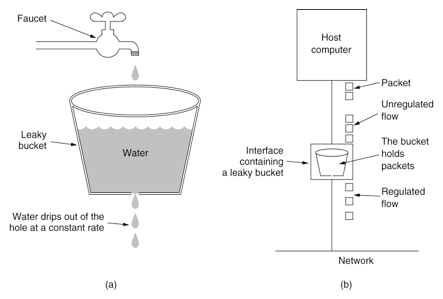
public class LeakyDemo { public long timeStamp = getNowTime(); public int capacity; // 桶的容量 public int rate; // 水漏出的速度 public int water; // 当前水量(当前累积请求数) public boolean grant() { long now = getNowTime(); water = max(0, water - (now - timeStamp) * rate); // 先执行漏水,计算剩余水量 timeStamp = now; if ((water + 1) < capacity) { // 尝试加水,并且水还未满 water += 1; return true; } else { // 水满,拒绝加水 return false; } } }
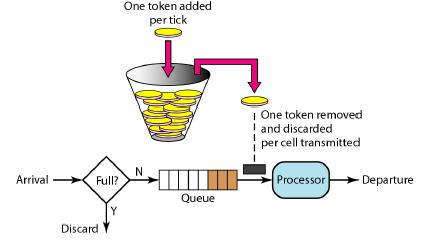
public class TokenBucketDemo { public long timeStamp = getNowTime(); public int capacity; // 桶的容量 public int rate; // 令牌放入速度 public int tokens; // 当前令牌数量 public boolean grant() { long now = getNowTime(); // 先添加令牌 tokens = min(capacity, tokens + (now - timeStamp) * rate); timeStamp = now; if (tokens < 1) { // 若不到1个令牌,则拒绝 return false; } else { // 还有令牌,领取令牌 tokens -= 1; return true; } } }
/** * The default initial capacity - MUST be a power of two. */ static final int DEFAULT_INITIAL_CAPACITY = 1 << 4; // aka 16
/** * The maximum capacity, used if a higher value is implicitly specified * by either of the constructors with arguments. * MUST be a power of two <= 1<<30. */ static final int MAXIMUM_CAPACITY = 1 << 30;
/** * The load factor used when none specified in constructor. */ static final float DEFAULT_LOAD_FACTOR = 0.75f;
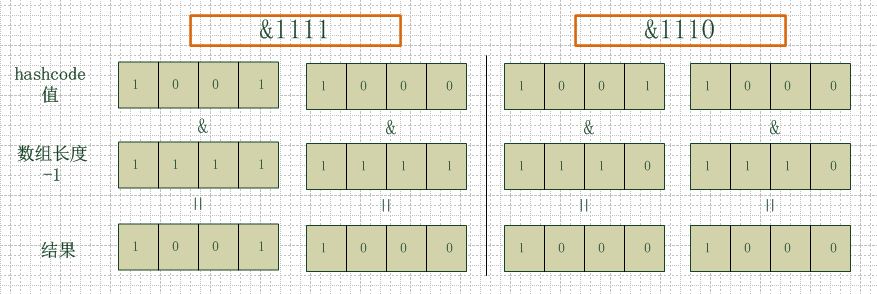
为了弄清楚这个问题,Bruce Eckel(Thinking in JAVA的作者)专程采访了java.util.hashMap的作者Joshua Bloch,此设计的原因 取模运算在包括Java在内的大多数语言中的效率都十分低下,而当除数为2的N次方时,取模运算将退化为最简单的位运算,其效率明显提升(按照Bruce Eckel给出的数据,大约可以提升5~8倍)
1 2 3 4 5 6 7
/** * Returns index for hash code h. */ static int indexFor(int h, int length) { // assert Integer.bitCount(length) == 1 : "length must be a non-zero power of 2"; return h & (length-1); }
/** * Associates the specified value with the specified key in this map. * If the map previously contained a mapping for the key, the old * value is replaced. * * @param key key with which the specified value is to be associated * @param value value to be associated with the specified key * @return the previous value associated with <tt>key</tt>, or * <tt>null</tt> if there was no mapping for <tt>key</tt>. * (A <tt>null</tt> return can also indicate that the map * previously associated <tt>null</tt> with <tt>key</tt>.) */ public V put(K key, V value) { if (table == EMPTY_TABLE) { inflateTable(threshold); } if (key == null) return putForNullKey(value); int hash = hash(key); int i = indexFor(hash, table.length); for (Entry<K,V> e = table[i]; e != null; e = e.next) { Object k; if (e.hash == hash && ((k = e.key) == key || key.equals(k))) { V oldValue = e.value; e.value = value; e.recordAccess(this); return oldValue; } }
int capacity = 1; while (capacity < initialCapacity) capacity <<= 1;
threshold的值=容量*负载因子
看下roundUpToPowerOf2()
1 2 3 4 5 6
private static int roundUpToPowerOf2(int number) { // assert number >= 0 : "number must be non-negative"; return number >= MAXIMUM_CAPACITY ? MAXIMUM_CAPACITY : (number > 1) ? Integer.highestOneBit((number - 1) << 1) : 1; }
主要是Integer.highestOneBit
1 2 3 4 5 6 7 8 9
public static int highestOneBit(int i) { // HD, Figure 3-1 i |= (i >> 1); i |= (i >> 2); i |= (i >> 4); i |= (i >> 8); i |= (i >> 16); return i - (i >>> 1); }
/** * Offloaded version of put for null keys */ private V putForNullKey(V value) { for (Entry<K,V> e = table[0]; e != null; e = e.next) { if (e.key == null) { V oldValue = e.value; e.value = value; e.recordAccess(this); return oldValue; } } modCount++; addEntry(0, null, value, 0); return null; }
这个逻辑比较简单
第一步,如果找到之前有key为null的key,进行一下value替换,返回oldValue
如果没有为null的key,那进行addEntry() 添加元素的主要方法
1
2
3
4
5
6
7
8
9
10
11
12
13
14
15
16
/** * Adds a new entry with the specified key, value and hash code to * the specified bucket. It is the responsibility of this * method to resize the table if appropriate. * * Subclass overrides this to alter the behavior of put method. */ void addEntry(int hash, K key, V value, int bucketIndex) { if ((size >= threshold) && (null != table[bucketIndex])) { resize(2 * table.length); hash = (null != key) ? hash(key) : 0; bucketIndex = indexFor(hash, table.length); }
void createEntry(int hash, K key, V value, int bucketIndex) { Entry<K,V> e = table[bucketIndex]; table[bucketIndex] = new Entry<>(hash, key, value, e); size++; }
static class Entry<K,V> implements Map.Entry<K,V> { final K key; V value; Entry<K,V> next; int hash; Entry(int h, K k, V v, Entry<K,V> n) { value = v; next = n; key = k; hash = h; }
/** * A randomizing value associated with this instance that is applied to * hash code of keys to make hash collisions harder to find. If 0 then * alternative hashing is disabled. */ transient int hashSeed = 0; /** * Initialize the hashing mask value. We defer initialization until we * really need it. */ final boolean initHashSeedAsNeeded(int capacity) { boolean currentAltHashing = hashSeed != 0; boolean useAltHashing = sun.misc.VM.isBooted() && (capacity >= Holder.ALTERNATIVE_HASHING_THRESHOLD); boolean switching = currentAltHashing ^ useAltHashing; if (switching) { hashSeed = useAltHashing ? sun.misc.Hashing.randomHashSeed(this) : 0; } return switching; }
The seed parameter is a means for you to randomize the hash function. You should provide the same seed value for all calls to the hashing function in the same application of the hashing function. However, each invocation of your application (assuming it is creating a new hash table) can use a different seed, e.g., a random value.
Why is it provided?
One reason is that attackers may use the properties of a hash function to construct a denial of service attack. They could do this by providing strings to your hash function that all hash to the same value destroying the performance of your hash table. But if you use a different seed for each run of your program, the set of strings the attackers must use changes.
private abstract class HashIterator<E> implements Iterator<E> { Entry<K,V> next; // next entry to return int expectedModCount; // For fast-fail int index; // current slot Entry<K,V> current; // current entry final Entry<K,V> nextEntry() { if (modCount != expectedModCount) throw new ConcurrentModificationException();
这个内部遍历类使用了Fail-Fast机制
1 2 3 4 5 6 7 8
/** * The number of times this HashMap has been structurally modified * Structural modifications are those that change the number of mappings in * the HashMap or otherwise modify its internal structure (e.g., * rehash). This field is used to make iterators on Collection-views of * the HashMap fail-fast. (See ConcurrentModificationException). */ transient int modCount;
该类提供了线程局部 (thread-local)变量。 这些变量不同于它们的普通对应物,因为访问某个变量(通过其 get 或 set 方法)的每个线程都有自己的局部变量,它独立于变量的初始化副本。 ThreadLocal 实例通常是类中的 private static 字段,它们希望将状态与某一个线程(例如,用户 ID 或事务 ID)相关联。
public class HibernateUtil { private static Log log = LogFactory.getLog(HibernateUtil.class); private static final SessionFactory sessionFactory; //定义SessionFactory static { try { // 通过默认配置文件hibernate.cfg.xml创建SessionFactory sessionFactory = new Configuration().configure().buildSessionFactory(); } catch (Throwable ex) { log.error("初始化SessionFactory失败!", ex); throw new ExceptionInInitializerError(ex); } }
//创建线程局部变量session,用来保存Hibernate的Session public static final ThreadLocal session = new ThreadLocal(); /** * 获取当前线程中的Session * @return Session * @throws HibernateException */ public static Session currentSession() throws HibernateException { Session s = (Session) session.get(); // 如果Session还没有打开,则新开一个Session if (s == null) { s = sessionFactory.openSession(); session.set(s); //将新开的Session保存到线程局部变量中 } return s; } public static void closeSession() throws HibernateException { //获取线程局部变量,并强制转换为Session类型 Session s = (Session) session.get(); session.set(null); if (s != null) s.close(); } }
Threadlocal源码
这个类有以下方法:
get():返回当前线程拷贝的局部线程变量的值。
initialValue():返回当前线程赋予局部线程变量的初始值。
remove():移除当前线程赋予局部线程变量的值。
set(T value):为当前线程拷贝的局部线程变量设置一个特定的值。
get()方法
1 2 3 4 5 6 7 8 9 10
public T get() { Thread t = Thread.currentThread(); ThreadLocalMap map = getMap(t); if (map != null) { ThreadLocalMap.Entry e = map.getEntry(this); if (e != null) return (T)e.value; } return setInitialValue(); }
根据当前线程,拿到ThreadLocalMap,通过当前threadloal对象取到value.
1 2 3 4 5 6 7 8 9 10 11 12 13 14 15 16 17 18
private T setInitialValue() { T value = initialValue(); Thread t = Thread.currentThread(); ThreadLocalMap map = getMap(t); if (map != null) map.set(this, value); else createMap(t, value); return value; } ThreadLocalMap getMap(Thread t) { return t.threadLocals; } void createMap(Thread t, T firstValue) { t.threadLocals = new ThreadLocalMap(this, firstValue); }
Thread.java 里面
ThreadLocalMap是Thread的属性
1 2 3
/* ThreadLocal values pertaining to this thread. This map is maintained * by the ThreadLocal class. */ ThreadLocal.ThreadLocalMap threadLocals = null;
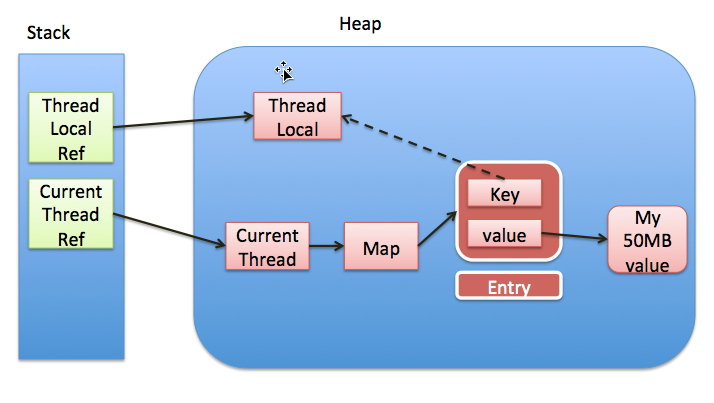
Thread Ref -> Thread -> ThreaLocalMap -> Entry -> value
永远无法回收,造成内存泄露。
进一步分析一下ThreadlocalMap
1 2 3 4 5 6 7 8 9 10 11
/** * ThreadLocalMap is a customized hash map suitable only for * maintaining thread local values. No operations are exported * outside of the ThreadLocal class. The class is package private to * allow declaration of fields in class Thread. To help deal with * very large and long-lived usages, the hash table entries use * WeakReferences for keys. However, since reference queues are not * used, stale entries are guaranteed to be removed only when * the table starts running out of space. */ static class ThreadLocalMap {
/** * The entries in this hash map extend WeakReference, using * its main ref field as the key (which is always a * ThreadLocal object). Note that null keys (i.e. entry.get() * == null) mean that the key is no longer referenced, so the * entry can be expunged from table. Such entries are referred to * as "stale entries" in the code that follows. */ static class Entry extends WeakReference<ThreadLocal> { /** The value associated with this ThreadLocal. */ Object value;
/** * Construct a new map initially containing (firstKey, firstValue). * ThreadLocalMaps are constructed lazily, so we only create * one when we have at least one entry to put in it. */ ThreadLocalMap(ThreadLocal firstKey, Object firstValue) { //默认16长度 table = new Entry[INITIAL_CAPACITY]; //hashcode取模,得到坑位 int i = firstKey.threadLocalHashCode & (INITIAL_CAPACITY - 1); table[i] = new Entry(firstKey, firstValue); size = 1; setThreshold(INITIAL_CAPACITY); }
/** * Set the resize threshold to maintain at worst a 2/3 load factor. */ private void setThreshold(int len) { threshold = len * 2 / 3; }
private void set(ThreadLocal key, Object value) {
// We don't use a fast path as with get() because it is at // least as common to use set() to create new entries as // it is to replace existing ones, in which case, a fast // path would fail more often than not. Entry[] tab = table; int len = tab.length; int i = key.threadLocalHashCode & (len - 1);
for (Entry e = tab[i]; e != null; e = tab[i = nextIndex(i, len)]) { ThreadLocal k = e.get();
tab[i] = new Entry(key, value); int sz = ++size; if (!cleanSomeSlots(i, sz) && sz >= threshold) rehash(); } private void replaceStaleEntry(ThreadLocal key, Object value, int staleSlot) { Entry[] tab = table; int len = tab.length; Entry e;
// Back up to check for prior stale entry in current run. // We clean out whole runs at a time to avoid continual // incremental rehashing due to garbage collector freeing // up refs in bunches (i.e., whenever the collector runs). int slotToExpunge = staleSlot; //替换掉之前有key=null的 for (int i = prevIndex(staleSlot, len); (e = tab[i]) != null; i = prevIndex(i, len)) if (e.get() == null) slotToExpunge = i;
// Find either the key or trailing null slot of run, whichever // occurs first for (int i = nextIndex(staleSlot, len); (e = tab[i]) != null; i = nextIndex(i, len)) { ThreadLocal k = e.get();
// If we find key, then we need to swap it // with the stale entry to maintain hash table order. // The newly stale slot, or any other stale slot // encountered above it, can then be sent to expungeStaleEntry // to remove or rehash all of the other entries in run. if (k == key) { e.value = value;
tab[i] = tab[staleSlot]; tab[staleSlot] = e;
// Start expunge at preceding stale entry if it exists if (slotToExpunge == staleSlot) slotToExpunge = i; cleanSomeSlots(expungeStaleEntry(slotToExpunge), len); return; }
// If we didn't find stale entry on backward scan, the // first stale entry seen while scanning for key is the // first still present in the run. if (k == null && slotToExpunge == staleSlot) slotToExpunge = i; }
// If key not found, put new entry in stale slot tab[staleSlot].value = null; tab[staleSlot] = new Entry(key, value);
// If there are any other stale entries in run, expunge them if (slotToExpunge != staleSlot) cleanSomeSlots(expungeStaleEntry(slotToExpunge), len); }
public class Pi { public static double calcPi() { double re = 0; for (int i = 1; i < 100000; i++) { re += ((i & 1) == 0 ? -1 : 1) * 1.0 / (2 * i - 1); } return re * 4; }
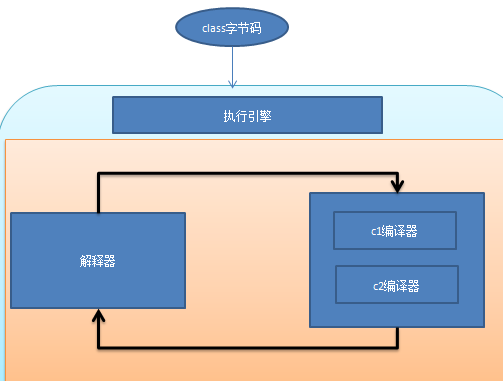
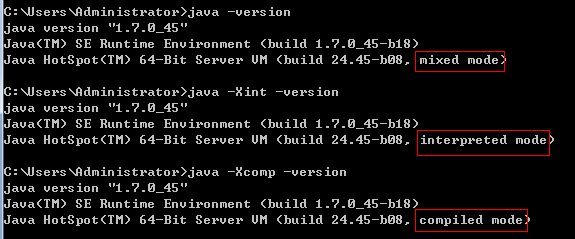
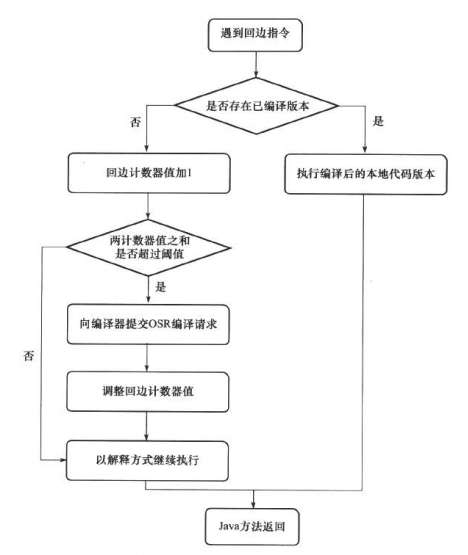
public static void main(String[] args) { long b = System.currentTimeMillis(); for (int i = 0; i < 100000; i++) calcPi(); long e = System.currentTimeMillis(); System.err.println("spend:" + (e - b) + "ms"); } } mixed:spend:418ms int:spend:2547ms comp:spend:416ms
$ java -server -XX:+CITime Benchmark [...] Accumulated compiler times (for compiled methods only) ------------------------------------------------ Total compilation time : 0.178 s Standard compilation : 0.129 s, Average : 0.004 On stack replacement : 0.049 s, Average : 0.024 [...]
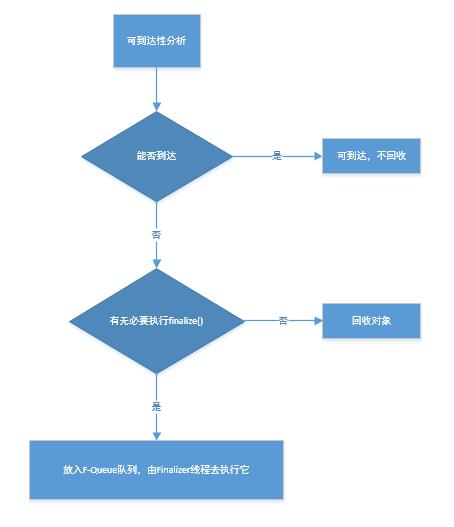
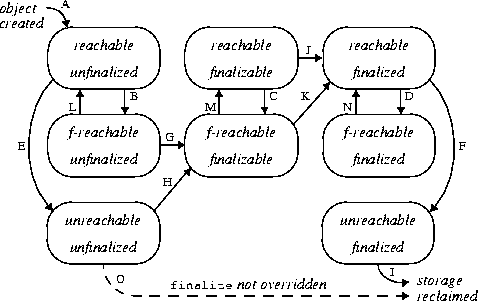
在某个时刻,JVM取出某个finalizable对象,将其标记为finalized并在某个线程中执行其finalize方法。由于是在活动线程中引用了该对象,该对象将变迁到(reachable, finalized)状态(K或J)。该动作将影响某些其他对象从f-reachable状态重新回到reachable状态(L, M, N), 这就是对象重生
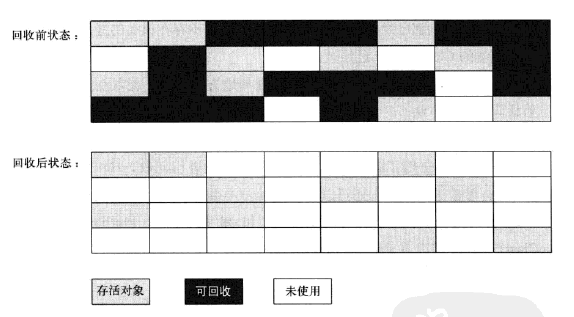
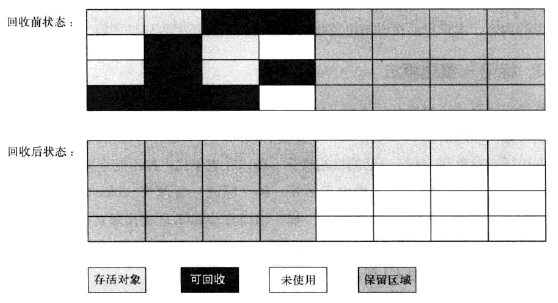
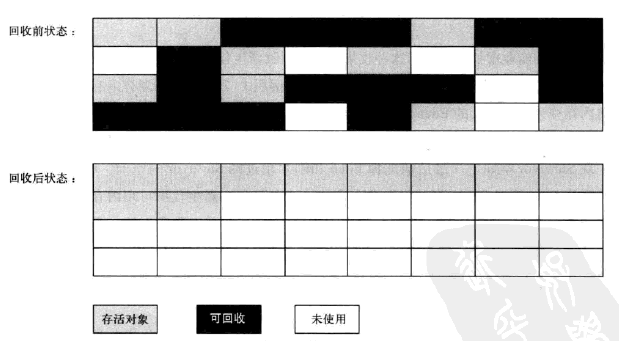
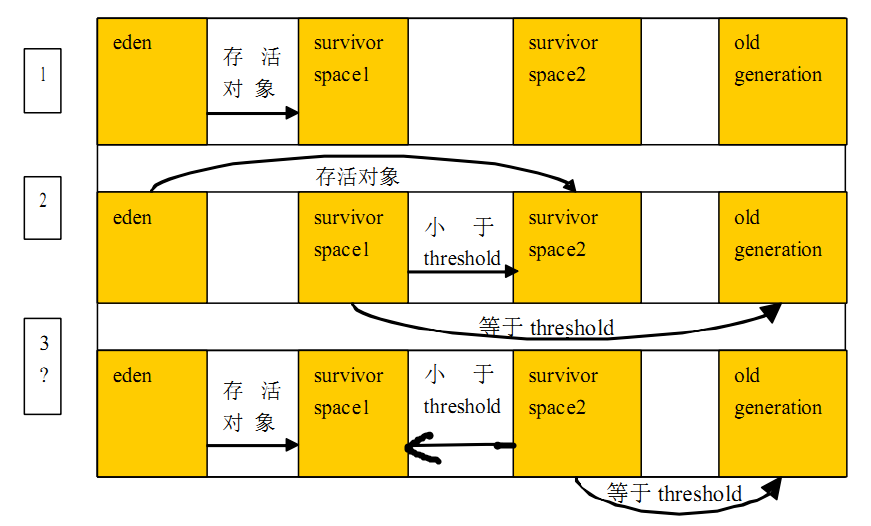
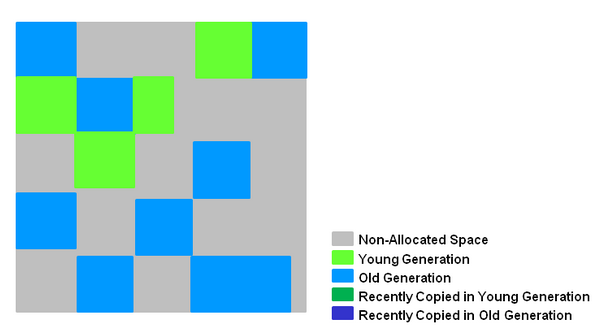
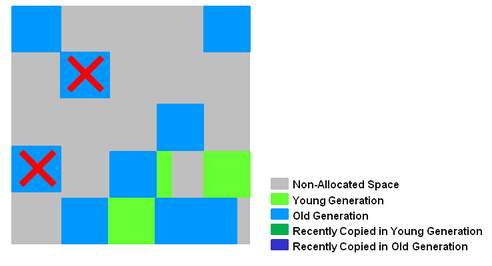
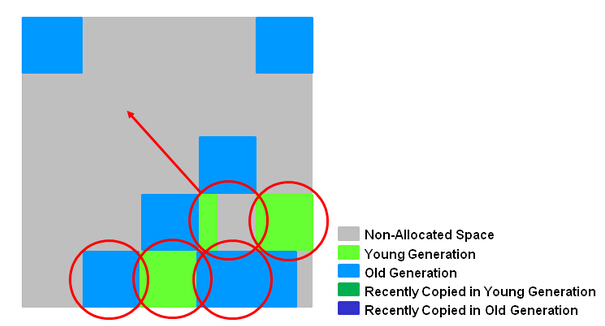
The reason for the HotSpot JVM’s two survivor spaces is to reduce the need to deal with fragmentation. New objects are allocated in eden space. All well and good. When that’s full, you need a GC, so kill stale objects and move live ones to a survivor space, where they can mature for a while before being promoted to the old generation. Still good so far. The next time we run out of eden space, though, we have a conundrum. The next GC comes along and clears out some space in both eden and our survivor space, but the spaces aren’t contiguous. So is it better to
Try to fit the survivors from eden into the holes in the survivor space that were cleared by the GC?
Shift all the objects in the survivor space down to eliminate the fragmentation, and then move the survivors into it?
Just say “screw it, we’re moving everything around anyway,” and copy all of the survivors from both spaces into a completely separate space–the second survivor space–thus leaving you with a clean eden and survivor space where you can repeat the sequence on the next GC?
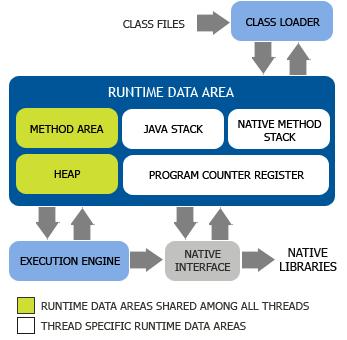
Exception in thread "main" java.lang.OutOfMemoryError: Direct buffer memory at java.nio.Bits.reserveMemory(Bits.java:658) at java.nio.DirectByteBuffer.<init>(DirectByteBuffer.java:123) at java.nio.ByteBuffer.allocateDirect(ByteBuffer.java:306) at com.stevex.app.nio.DirectByteBufferTest.main(DirectByteBufferTest.java:8)
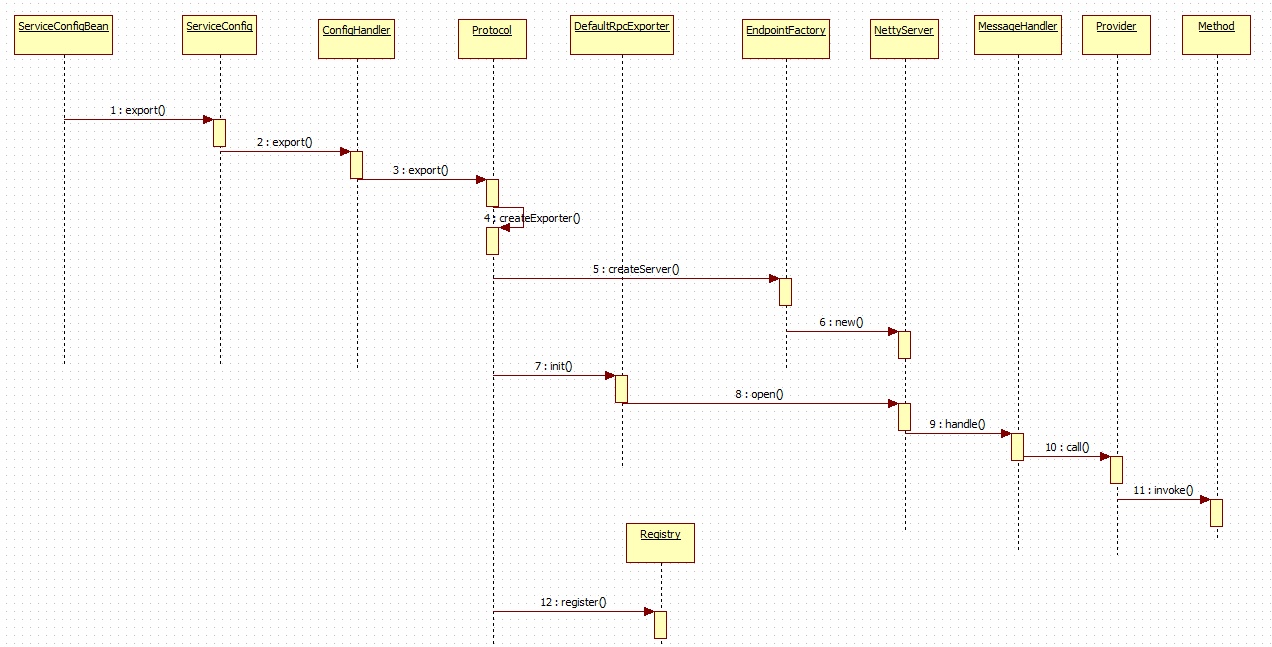
public synchronized void export() { if (exported.get()) { LoggerUtil.warn(String.format("%s has already been expoted, so ignore the export request!", interfaceClass.getName())); return; }
// don't need to notifylisteners, because onSuccess or // onFailure or cancel method already call notifylisteners return getValueOrThrowable(); } else { long waitTime = timeout - (System.currentTimeMillis() - createTime);
if (waitTime > 0) { for (;;) { try { lock.wait(waitTime); } catch (InterruptedException e) { }
pipeline.addLast("handler", new NettyChannelHandler(NettyClient.this, new MessageHandler() { @Override public Object handle(Channel channel, Object message) { //得到返回对象 Response response = (Response) message; //得到对应request的future NettyResponseFuture responseFuture = NettyClient.this.removeCallback(response.getRequestId());
if (responseFuture == null) { LoggerUtil.warn( "NettyClient has response from server, but resonseFuture not exist, requestId={}", response.getRequestId()); return null; }
What is the difference between Service Provider Interface (SPI) and Application Programming Interface (API)? More specifically, for Java libraries, what makes them an API and/or SPI? the API is the description of classes/interfaces/methods/... that you call and use to achieve a goal the SPI is the description of classes/interfaces/methods/... that you extend and implement to achieve a goal Put differently, the API tells you what a specific class/method does for you and the SPI tells you what you must do to conform. Sometimes SPI and API overlap. For example in JDBC the Driver class is part of the SPI: If you simply want to use JDBC, you don't need to use it directly, but everyone who implements a JDBC driver must implement that class. The Connection interface on the other hand is both SPI and API: You use it routinely when you use a JDBC driver and it needs to be implemented by the developer of the JDBC driver。
JDK spi
使用jdk自带的ServiceLoader写一个示例:
一个接口
1 2 3 4
public interface Spi {
public void provide(); }
一个实现类
1 2 3 4 5 6 7
public class DefaultSpi implements Spi{
@Override public void provide() { System.out.println("默认spi实现"); } }
入口类
1 2 3 4 5 6 7 8 9 10 11 12 13 14 15 16 17
/** * 一个spi的demo * */ public class SpiDemoMain { public static void main( String[] args ) { ServiceLoader<Spi> spiServiceLoader = ServiceLoader.load(Spi.class);